XMas Decor. 3D Christmas Stand Laser Cut: A Practical Guide to Digital Asset Integration
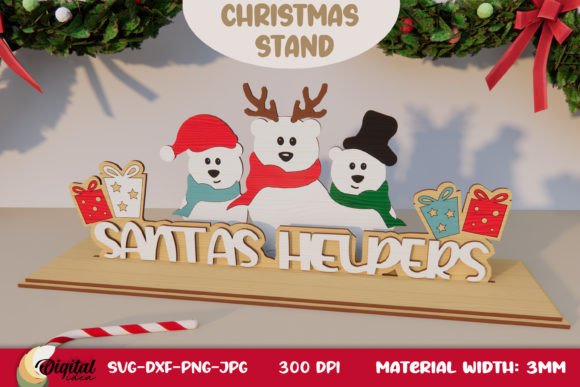
The holiday season presents a unique intersection of creative expression and logistical planning for makers, small business owners, and interior design enthusiasts. In this context, XMas Decor. 3D Christmas Stand Laser Cut serves not merely as a decorative item, but as a versatile digital asset that streamlines the production of high-quality seasonal displays. For professionals and hobbyists alike, the value lies in the adaptability of the design files and the efficiency they bring to the fabrication process. Understanding how to integrate these assets into your existing workflow can significantly reduce preparation time while enhancing the final aesthetic output.
This article explores the practical application of laser-cut Christmas stand designs, focusing on file compatibility, material selection, and workflow optimization. Whether you are producing limited-edition gifts, scaling a small e-commerce operation, or simply upgrading your home office decor, the principles of efficient digital fabrication remain consistent. By treating the design file as a core component of your project pipeline, you ensure consistency, quality, and repeatability.
Understanding the Digital Asset Package
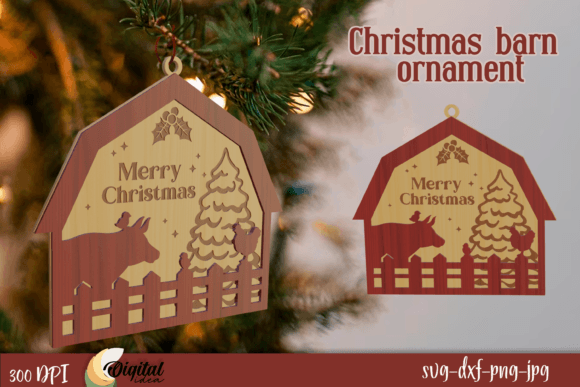
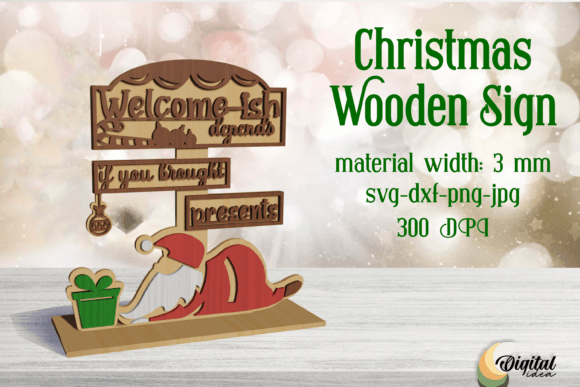
When you acquire a design package labeled XMas Decor. 3D Christmas Stand Laser Cut, you are purchasing more than a single image. You are investing in a multi-format library designed for interoperability across various software ecosystems. The inclusion of SVG, DXF, EPS, PDF, JPEG, and PNG formats ensures that the design is accessible regardless of your preferred toolchain.
- SVG and DXF: These are vector formats essential for laser cutting software. They define paths rather than pixels, allowing the laser cutter to interpret exact cut lines without resolution loss. SVG is widely supported by browser-based and entry-level cutting software, while DXF is the industry standard for professional CAD and CAM applications.
- EPS and PDF: These formats are crucial for graphic designers who may need to incorporate the stand’s silhouette into broader marketing materials, packaging designs, or print catalogs before the physical product is even manufactured.
- JPEG and PNG: While not used for cutting, these raster images are vital for pre-visualization, social media promotion, and website listings. They allow you to showcase the product’s potential to clients or audiences without needing to produce a physical prototype first.
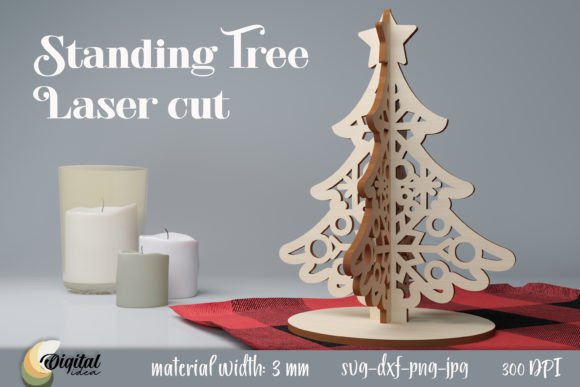
The availability of these diverse formats eliminates the bottleneck of file conversion. In a professional workflow, time spent converting files is non-billable and prone to error. By having native access to vector data, you maintain the integrity of the design’s geometry, ensuring that intricate details—such as snowflake patterns or interlocking tabs—are preserved during the cutting process.
Integration into Creative and Business Workflows
The utility of XMas Decor. 3D Christmas Stand Laser Cut extends beyond the moment of fabrication. It fits seamlessly into three distinct phases of a project lifecycle: preparation, execution, and distribution.
Preparation and Planning
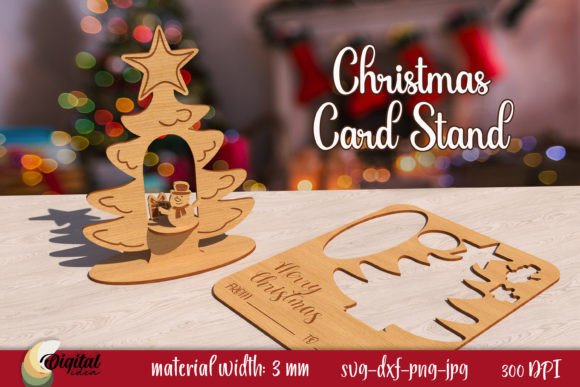
Before any material is cut, the design phase involves selecting the appropriate scale and material thickness. The 3D nature of the stand implies assembly, which requires precise tolerances. During the planning stage, use the provided PDF or EPS files to create a mockup. This allows you to visualize how the stand will occupy space on a desk, shelf, or retail display. For educators and workshop leaders, this phase is an excellent opportunity to teach spatial reasoning and design thinking. Students or participants can analyze the interlocking mechanisms, understanding how 2D planes translate into 3D structures.
For entrepreneurs, this stage involves cost analysis. By importing the DXF file into your nesting software, you can calculate material usage efficiency. This data informs pricing strategies and inventory planning. Knowing exactly how many stands can be cut from a single sheet of plywood or acrylic helps minimize waste and maximize profit margins.
Execution and Fabrication
During the execution phase, the focus shifts to machine settings and material compatibility. The success of a laser-cut project depends heavily on the interaction between the laser’s power, speed, and the chosen substrate. Common materials for Christmas stands include birch plywood, MDF, and acrylic. Each material reacts differently to laser heat.
Birch plywood offers a warm, traditional aesthetic but requires careful calibration to avoid excessive charring on the edges. MDF provides a smooth, uniform surface ideal for painting but produces more smoke and residue. Acrylic yields a modern, glossy finish with clean edges but melts if the laser speed is too slow. The vector paths in the SVG or DXF files allow you to assign different colors to different operations—for example, red lines for cutting and blue lines for engraving. This separation enables you to optimize settings for each task independently, ensuring that decorative engravings do not compromise the structural integrity of the cut lines.
Post-Processing and Distribution
After cutting, the workflow moves to assembly and finishing. The 3D stand typically consists of multiple interlocking pieces. Quality control at this stage is critical. Check for fit; parts should slide together snugly without requiring excessive force, which could crack the material. If gaps are present, it may indicate a need to adjust the kerf compensation settings in your laser software for future batches.
For those selling these items, the post-processing phase includes packaging. The flat-pack nature of laser-cut designs is a logistical advantage. Shipping flat pieces reduces volume and weight, lowering shipping costs and environmental impact. Include clear assembly instructions, perhaps using the PNG images from the package as visual guides. This enhances the customer experience and reduces support queries.
Material Selection and Compatibility Considerations
Choosing the right material is pivotal to the final outcome. The XMas Decor. 3D Christmas Stand Laser Cut design is versatile, but its appearance changes dramatically based on the substrate.
- Wood Veneers and Plywood: Ideal for a rustic, cozy holiday feel. Ensure the plywood is free of voids, as these can cause uneven cutting. Light sands may be required to remove soot from the edges.
- Acrylic: Best for modern, minimalist interiors. Clear or frosted acrylic can be combined with LED lights to create illuminated displays. The transparency adds depth to the 3D structure.
- Cardboard and Paperboard: Suitable for prototyping or temporary installations. This low-cost option allows for rapid iteration of design modifications before committing to expensive materials.
When working with mixed materials, consider the thermal properties. Combining wood and acrylic in a single assembly requires attention to adhesive selection, as some glues may fog acrylic or fail to bond with treated woods.
Optimizing for Efficiency and Consistency
For those producing these stands in quantity, consistency is key. Establish a standardized workflow document that records optimal laser settings for each material type. This reference guide ensures that every batch meets the same quality standards, regardless of who is operating the machine.
Organization of digital assets is equally important. Store the XMas Decor. 3D Christmas Stand Laser Cut files in a structured directory system. Separate folders for raw vectors, nested cutting files, and marketing images prevent confusion and save time during high-pressure production periods. Version control is also advisable; if you modify the design to improve fit or add features, save it as a new version rather than overwriting the original. This preserves the ability to revert to previous iterations if needed.
Furthermore, consider the scalability of the design. Can the stand be resized without compromising structural integrity? Test scaling factors between 80% and 120% to determine the limits of the design. This flexibility allows you to offer multiple size options to customers, expanding your market reach without creating entirely new designs from scratch.
Long-Term Value and Reusability
Investing in high-quality digital assets like XMas Decor. 3D Christmas Stand Laser Cut offers long-term value. Unlike physical inventory, digital files do not degrade, occupy warehouse space, or become obsolete quickly. They can be reused year after year, with minor adjustments to keep the offering fresh. You might pair the same stand design with different thematic elements—such as changing the engraved pattern from snowflakes to stars—by simply editing the vector file.
For educators and community workshop leaders, these files serve as reusable teaching tools. They provide a tangible example of computer-aided manufacturing, bridging the gap between digital design and physical creation. By integrating these assets into your curriculum or business model, you build a foundation of reliable, high-quality outputs that enhance your professional reputation.
In conclusion, the XMas Decor. 3D Christmas Stand Laser Cut is more than a festive decoration; it is a strategic resource for creators and businesses. By understanding its file formats, optimizing material choices, and integrating it into a structured workflow, you can achieve efficient, high-quality results. Whether for personal enjoyment or commercial production, this digital asset empowers you to create meaningful, professional-grade holiday decor with precision and ease.