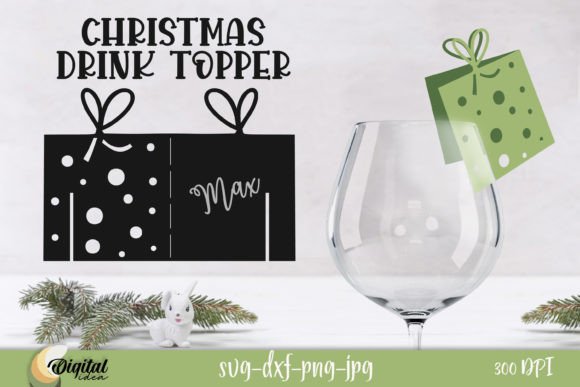
Integrating the Christmas Drink Topper SVG into Your Holiday Design Workflow
The holiday season presents a unique convergence of high-volume creative demand and tight deadlines for designers, small business owners, and DIY enthusiasts. Whether you are producing custom merchandise for an online store, preparing branded materials for corporate events, or crafting personalized gifts for friends and family, efficiency is paramount. In this context, digital assets like the Christmas Drink Topper SVG serve as more than just decorative elements; they are foundational components of a streamlined production pipeline. By understanding how to effectively integrate these vector files into your existing workflows, you can reduce preparation time, ensure consistent quality, and scale your output without sacrificing creativity.
Understanding the Asset and Its Strategic Value
A Christmas Drink Topper SVG is a scalable vector graphic designed specifically to be cut, printed, or layered onto beverage accessories. These toppers, often attached to straws, stirrers, or cup rims, add a festive three-dimensional element to holiday drinks. From a workflow perspective, the value of this asset lies in its versatility and compatibility. Unlike raster images, which lose quality when resized, SVG files maintain crisp edges at any dimension. This characteristic is crucial when adapting designs for different output methods, such as vinyl cutting, laser engraving, or sublimation printing.
When you acquire a comprehensive package that includes SVG, DXF, EPS, PDF, JPEG, and PNG formats, you are essentially securing a multi-platform solution. Each file format serves a distinct purpose in the production chain. The SVG and DXF files are primary inputs for cutting machines like Cricut or Silhouette. The EPS file is ideal for professional graphic design software like Adobe Illustrator, allowing for further manipulation of nodes and paths. Meanwhile, the PNG and JPEG files provide immediate visual references or can be used for digital mockups and social media previews before physical production begins. Recognizing the specific role of each format prevents bottlenecks later in the process.
Pre-Production: Preparation and Compatibility Checks
Successful implementation begins before the first cut is made. The pre-production phase involves organizing your digital library and ensuring software compatibility. When you download the zip folder containing the Christmas 3D Decor SVG and related drink topper designs, the first step is extraction and organization. Create a dedicated project folder on your local drive or cloud storage. Inside, categorize the files by type or intended use. This simple organizational habit saves significant time when you are managing multiple holiday projects simultaneously.
Next, verify compatibility with your chosen hardware and software. If you are using a vinyl cutter, import the SVG or DXF file into your machine’s companion software. Check the path integrity. Vector files sometimes contain stray nodes or overlapping paths that can cause cutting errors. Use the "weld" or "union" functions in your design software to merge overlapping shapes, ensuring the machine cuts a single continuous line rather than redundant paths. This step is critical for maintaining material efficiency and preventing jams or miscuts during high-volume runs.
For those utilizing laser cutters or engravers, the EPS or PDF formats may offer better precision depending on the driver software. Ensure that your design layers are correctly assigned for cutting versus engraving. For example, if the drink topper involves multiple layers of acrylic or cardstock to create a 3D effect, each layer must be on a separate color-coded layer in your design file. This separation allows the laser software to recognize depth and order, facilitating an accurate assembly process later.
Execution: Integrating into Creative and Business Workflows
Once the files are prepared, the execution phase varies based on your end goal. For small business owners selling holiday merchandise, consistency is key. Using the same Christmas Drink Topper SVG across a product line—such as matching coasters, napkins, and drink toppers—creates a cohesive brand experience. You can batch-process these designs by nesting multiple instances of the SVG on a single virtual mat within your cutting software. This maximizes material usage and reduces the number of machine cycles required, directly impacting your profit margins.
For educators or community organizers planning holiday events, these assets can be used to create interactive activities. Pre-cutting the drink toppers allows participants to focus on assembly and decoration, making the activity accessible to various skill levels. In this scenario, the PNG and JPEG files included in the zip folder can be printed as instruction sheets or visual guides, helping users understand the final look and assembly steps. This dual use of vector and raster files enhances the user experience and reduces the need for additional explanatory materials.
Freelance designers and marketers can leverage these assets for rapid prototyping. Before committing to physical production, use the PNG files to create digital mockups for client approval. Place the drink topper design onto photos of festive beverages using photo editing software. This visual confirmation helps clients visualize the final product, reducing revision cycles and accelerating the approval process. Once approved, switch to the SVG or EPS file for final production, ensuring the highest quality output.
Material Selection and Quality Control
The choice of material significantly influences the final appearance and durability of the drink topper. Cardstock is a popular choice for its rigidity and ease of cutting, but it is not waterproof. For drinks that may condense or spill, consider using waterproof vinyl or acrylic. When using the Christmas 3D Decor SVG with acrylic, ensure your laser cutter is calibrated for the specific thickness of the material. Test cuts on scrap pieces are essential to determine the correct power and speed settings, preventing charring or incomplete cuts.
Quality control should be integrated into every stage of production. After cutting, inspect each piece for clean edges and complete separation from the backing material. Remove any weeding debris carefully to avoid tearing delicate details. If the design involves layering, dry-fit the pieces before applying adhesive. This step ensures that all alignment holes or tabs match perfectly. Consistent quality control minimizes waste and ensures that every item meets professional standards, whether it is destined for a customer or a guest at a private event.
Post-Production: Assembly and Long-Term Use
Assembly is the final tangible step in the workflow. For multi-layered 3D toppers, use strong, clear-drying adhesive or double-sided foam tape to create depth. Allow sufficient drying time before handling to prevent shifting. If you are producing these in bulk, create an assembly line setup where each station handles a specific task, such as weeding, gluing, or attaching to straws. This methodical approach increases throughput and reduces fatigue.
Beyond the immediate holiday season, consider the long-term utility of these digital assets. Save your project files with clear naming conventions so they can be easily retrieved next year. You may choose to modify the colors or combine elements from the Christmas Drink Topper SVG with other designs to create new variations. Building a library of reusable, high-quality vector assets reduces the need to start from scratch in future projects, compounding your efficiency gains over time.
Furthermore, these files can be repurposed for other applications. The same vector paths used for drink toppers can be scaled up for window decals, gift tags, or ornament designs. This adaptability maximizes the return on investment for the digital purchase. By viewing the asset as a flexible component rather than a single-use item, you unlock greater creative potential and operational efficiency.
Conclusion
Incorporating a Christmas Drink Topper SVG into your holiday workflow is a strategic decision that balances creativity with practicality. By understanding the technical requirements of each file format, preparing your tools and materials meticulously, and implementing consistent quality control measures, you can achieve professional results efficiently. Whether you are a business owner scaling production, a creator designing unique gifts, or an educator facilitating festive activities, these digital assets provide a reliable foundation for success. The key lies in treating the design file not just as an image, but as an integral part of a broader, well-planned execution strategy.